
WIND • HAIL • FALLING DEBRIS • HEAVY RAIN
The Storm Is Over. Your Roof May Still Be Telling the Story.
Wind, hail and severe weather can damage a roofing system without leaving an obvious leak or visible problem from the ground.
Harrison’s Roofing evaluates storm-affected roofs, documents visible damage and helps you understand whether your roof needs repair, replacement or simply continued monitoring.
Residential • Commercial • Roof Repairs • Replacement • Emergency Protection
What Should You Do After a Severe Storm?
01
STAY SAFE
Do not climb onto a wet, damaged or storm-affected roof yourself.
Look from the ground for obvious concerns such as missing shingles, fallen limbs, displaced metal, damaged gutters or debris.
02
CHECK INSIDE
Look for:
- Water stains
- Dripping
- Damp ceilings
- Wet insulation
- Unusual attic moisture
- Visible daylight where it shouldn’t be
03
PROTECT THE PROPERTY
If water is entering the home, move belongings away from the affected area and take reasonable steps to prevent additional interior damage when it can be done safely.
04
HAVE THE ROOF EVALUATED
A professional roof evaluation can identify visible damage that may not be apparent from the ground.
Harrison’s will be glad to help!
Storms Damage Roofs in Different Ways.
WIND DAMAGE
High winds can lift, loosen, crease or remove shingles and can affect flashing, ridge materials and roof edges.
Wind-related damage can sometimes be subtle even when the roofing material is still in place.
HAIL DAMAGE
Hail can affect shingles, metal roofing, flashing, vents, gutters and other exterior components.
On asphalt shingles, impacts may loosen or displace protective granules and damage the shingle surface.
FALLING DEBRIS
Tree limbs and storm debris can puncture roofing materials, damage decking or create concentrated impact areas.
HEAVY RAIN
Rain may expose vulnerabilities that were already developing around flashing, penetrations, valleys, seams or other roofing details.
What Does Hail Damage Look Like?
The tricky part is that hail damage does not always look dramatic.
Possible signs may include:
Granule displacement
Impact marks
Bruising or fractures
Damaged vents or flashing
Dented metal components
Gutter or downspout impacts

Hail damage shouldn’t be diagnosed from a single photograph or from the ground.
The size, density and direction of hail—as well as the type, age and condition of roofing materials—can influence how a roof responds to a storm.
Wind Damage Isn’t Always a Missing Shingle.

People tend to look for bare roof decking after a storm.
But wind can also:
- Lift shingles without completely removing them
- Break or weaken adhesive seals
- Crease roofing materials
- Damage ridge caps
- Affect flashing
- Disturb roof edges
- Damage gutters or siding
A shingle can still be on your roof and still be damaged.
Where Storm Damage Can Affect Your Home
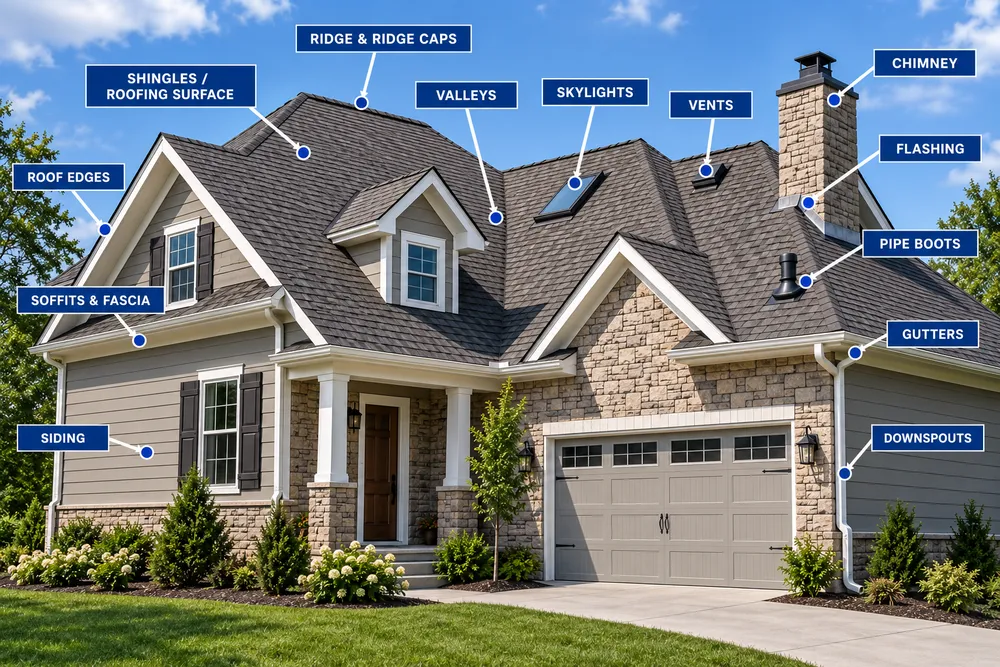
Sometimes Storm Damage Shows Up Inside First.
Look for:
WATER STAINS
Brown or yellow discoloration on ceilings or walls.
DRIPPING WATER
An obvious sign that water has entered the structure.
DAMP ATTIC MATERIALS
Wet insulation or roof decking may indicate moisture intrusion.
MUSTY OR DAMP CONDITIONS
Unexpected moisture can create conditions that deserve further evaluation.

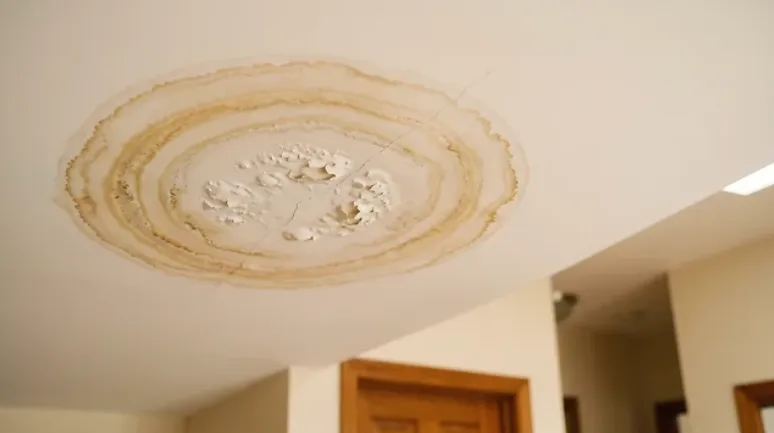
The location of an interior stain does not always identify the exact point where water entered the roof.
Water can travel along decking, framing or other materials before becoming visible.
When Your Roof Can’t Wait.
If storm damage has created an opening or active leak, temporary protection may be necessary before permanent repairs can be made.
Depending on the situation, that may include:
Temporary tarping
Emergency waterproofing
Debris-related damage protection
Temporary sealing of affected areas
Temporary protection is not the final repair.
It is intended to help limit additional damage until the roofing system can be properly repaired or replaced.
What We Look For After Severe Weather
MISSING SHINGLES
PIPE BOOT DAMAGE
LIFTED OR CREASED SHINGLES
RIDGE DAMAGE
HAIL IMPACTS
ROOF EDGE DAMAGE
DAMAGED FLASHING
GUTTERS AND DRAINAGE
Ventilation is still part of the roof evaluation.
Storm damage doesn’t eliminate the importance of the complete roofing system.
When appropriate, Harrison’s considers ventilation and other visible roofing components along with storm-related damage.
You Should Be Able to See What We See.
Storm damage can be difficult to understand from the ground.
When practical, photographs of visible roofing conditions can help you see what was found and understand the recommendation.
1. SEE THE DAMAGE
2. UNDERSTAND THE FINDINGS
3. KNOW YOUR OPTIONS

Storm Damage & Insurance Claims
If your roof has been damaged by a covered event, your homeowner’s insurance policy may provide coverage depending on the terms, exclusions, deductible and circumstances of the loss.
Harrison’s Roofing Can Help With the Roofing Side of the Process.
That can include:
Inspecting visible storm damage
Providing photographs when appropriate
Preparing a roofing estimate or scope of work
Meeting with an insurance adjuster when arranged
Completing approved roofing repairs or replacement
Your insurance company—not your roofing contractor—determines whether a loss is covered and what benefits are available under your policy.
What Happens If Storm Damage Is Found?
01
ROOF EVALUATION
Harrison’s evaluates the roof and identifies visible areas of concern.
02
DOCUMENTATION
When appropriate, photographs and roofing information help document what was observed.
03
CONTACT YOUR INSURER
If you choose to pursue a claim, contact your insurance company according to your policy requirements.
04
ADJUSTER INSPECTION
Your insurer may send an adjuster to evaluate the property.
05
REVIEW THE SCOPE
Once the insurance company’s determination is available, the roofing scope can be reviewed and discussed.
06
REPAIR OR REPLACEMENT
Approved roofing work can then be scheduled.
Does Storm Damage Mean You Need a New Roof?
REPAIR MAY MAKE SENSE
When damage is localized and the rest of the roofing system remains in serviceable condition.
REPLACEMENT MAY BE APPROPRIATE
When damage is extensive, widespread or affects enough of the roofing system that replacement becomes the practical solution.
NO IMMEDIATE WORK
Sometimes an inspection may show no significant storm-related roofing concern.
The storm doesn’t decide whether you need a new roof. The condition of the roof does.
A Storm Shouldn’t Create Pressure to Make a Fast Decision.
After major storms, homeowners may receive calls, door knocks or offers from contractors they have never worked with before.
Before hiring any contractor:
Verify the business
Ask about insurance
Read local reviews
Understand the contract
Ask who will actually perform the work
Never sign something you don’t understand
Then:
Choose a contractor you’ll still be able to call after the storm crews leave town.
Storm Damage Doesn’t Stop at the Roof.
Severe weather may also affect:
Gutters
Downspouts
Siding
Fascia
Soffits
Exterior trim
Metal components
Common storm-damage warning signs
MISSING SHINGLES
LIFTED OR CREASED SHINGLES
FALLEN LIMB DAMAGE
HAIL IMPACTS
DAMAGED FLASHING
DAMAGED GUTTERS
FAQ
How do I know if my roof has storm damage?
Some storm damage is obvious, but much of it can be difficult to see from the ground. After severe weather, you may notice missing or displaced shingles, lifted shingles, damaged flashing, dents in metal components, damaged gutters, fallen debris or roofing materials on the ground.
Inside the home, water stains, dripping or unexpected attic moisture may also indicate a problem.
However, the absence of an interior leak doesn’t necessarily mean the roof wasn’t affected. A professional roof evaluation can help identify visible storm-related concerns and determine whether further action is needed.
Can hail damage a roof without causing a leak?
Yes. A roof can sustain hail damage without immediately leaking.
Hail may affect the surface of asphalt shingles, displace protective granules or damage other roofing components without creating an immediate opening for water.
That’s one reason storm damage can go unnoticed. A roof doesn’t have to be leaking today to have been affected by a storm.
What does hail damage look like on shingles?
Possible hail-related damage to asphalt shingles can include areas of granule loss, impact marks, bruising, fractures or exposed asphalt.
Other components—such as metal flashing, vents, gutters and downspouts—may also show evidence of impact.
Not every mark on a shingle is hail damage. Normal aging, foot traffic, manufacturing characteristics and other conditions can sometimes look similar, which is why proper evaluation is important.
What does wind damage look like?
Wind damage can be much more subtle than a completely missing shingle.
Possible signs include:
- Missing or displaced shingles
- Lifted shingle tabs
- Creased or torn shingles
- Damaged ridge caps
- Loose flashing
- Damage along roof edges
- Displaced metal components
- Debris impact
One of the most important things for homeowners to understand is:
A shingle can still be on the roof and have been affected by wind.
Should I inspect my roof after every storm?
You don’t necessarily need a professional inspection after every ordinary rainstorm.
However, it’s wise to take a look from the ground following significant hail, high winds, falling branches or severe weather—especially if neighboring properties experienced damage.
If you notice something unusual or your property was exposed to a significant storm, having the roof professionally evaluated can provide a clearer picture of its condition.
How soon should I have storm damage inspected?
If you suspect damage, it’s generally best to have the roof evaluated as soon as reasonably practical, particularly if there is active leaking, missing roofing material or an opening that could allow additional water into the structure.
Prompt evaluation can help identify conditions that may need temporary protection or repair.
If insurance may be involved, also review your policy and contact your insurer promptly because policies can contain requirements and time limits for reporting losses.
Should I climb on my roof after a storm?
No. We don’t recommend homeowners climb onto a storm-damaged roof.
Wet roofing materials can be slippery, and wind, hail or falling debris may have created conditions that aren’t visible from the ground.
You can safely look for obvious damage from ground level, photograph what you can see and check accessible interior areas for signs of water.
Leave the rooftop evaluation to someone with the appropriate experience and safety equipment.
Can storm-damaged shingles be repaired?
Sometimes.
If storm damage is localized and compatible replacement materials are available, individual areas may be repairable.
The decision depends on factors such as the extent and location of the damage, age and condition of the existing roof, availability of compatible materials and whether an effective repair can be made.
A storm doesn’t automatically mean the entire roof needs replacement.
Does storm damage always require roof replacement?
No.
Some storm-related problems can be addressed with targeted repairs. Other situations involve widespread damage that may make replacement the more appropriate solution.
And sometimes an evaluation may find no significant storm-related roofing damage at all.
I’d emphasize this statement on the Harrison’s page:
The storm doesn’t determine whether you need a new roof. The condition of your roofing system does.
What should I do if my roof is actively leaking?
First, protect yourself and everyone inside the property. Avoid standing beneath sagging ceilings or areas where water is near electrical fixtures.
If it can be done safely, move furniture and valuables away from the affected area and use containers to collect dripping water.
Then contact a roofing professional promptly.
Do not climb onto a wet or storm-damaged roof and attempt a repair yourself.
If the damage may involve insurance, document the visible conditions and contact your insurance carrier as appropriate.
What if I don't see any damage from the ground?
Storm damage isn’t always visible from your driveway or yard. Some concerns—such as lifted shingles, hail impacts, damaged flashing or affected roof penetrations—may require a closer evaluation.
If your property experienced significant wind, hail or severe weather, don’t assume the roof is fine simply because all of the shingles appear to still be there.
Can you temporarily tarp a damaged roof?
Yes. When conditions allow it to be performed safely, temporary tarping or other temporary weather protection may be used to help protect a damaged area until permanent repairs can be completed.
A tarp is not a permanent roof repair. Its purpose is to help limit additional weather exposure until the damaged roofing system can be properly addressed.
Should I call a roofer or my insurance company first?
It can depend on the situation.
If you aren’t sure whether the roof has actually been damaged, a professional roofing evaluation can help you understand the visible condition of the roof.
If you have significant or obvious property damage, active water intrusion or already believe you have a covered loss, contact your insurance carrier promptly according to your policy requirements.
A roofer evaluates the roof. Your insurance company evaluates coverage.
Those are two different roles.
Will Harrison's meet with my insurance adjuster?
Yes. When requested and scheduling permits, Harrison’s Roofing can meet with your insurance adjuster to discuss the roofing system, point out documented areas of concern and answer roofing-related questions about the proposed work.
However, Harrison’s does not determine coverage or negotiate insurance benefits on behalf of the carrier. Coverage decisions are made by the insurance company according to your policy.
Does homeowners insurance cover hail damage?
Many homeowners insurance policies provide some form of coverage for hail damage, but coverage varies significantly by policy.
Your deductible, exclusions, roof age, type of coverage, depreciation provisions and circumstances of the loss can all affect what is covered and how a claim is settled.
Your insurance carrier determines whether hail damage is covered under your particular policy.
Does insurance cover wind damage?
Wind damage may be covered under many homeowners policies, but coverage depends on the specific policy and circumstances.
Policies can differ regarding deductibles, exclusions, roof age and how losses are valued.
Harrison’s can evaluate and document visible roofing conditions, while your insurance carrier determines whether the loss qualifies for coverage.
Will filing a claim guarantee my roof is replaced?
No.
Filing an insurance claim does not guarantee that the claim will be approved or that the insurance company will authorize complete roof replacement.
An insurer may determine that there is no covered damage, that damage is repairable, that only part of the loss is covered or that other policy provisions apply.
Can an insurance claim be denied?
Yes.
Insurance claims can be denied for a variety of reasons depending on the policy and circumstances. An insurer may determine that the observed condition isn’t the result of a covered event or that an exclusion or other policy provision applies.
If a claim is denied and you have questions about the decision, ask your insurance carrier for an explanation and review the applicable policy documents.
A roofing contractor can provide roofing information and documentation, but does not make the coverage determination.
What happens if my insurance estimate differs from the contractor estimate?
Differences can occur because an insurance estimate and a roofing contractor’s estimate may not contain exactly the same quantities, materials, accessories, labor, code-related items or scope of work.
If Harrison’s identifies a legitimate roofing item that isn’t included in the insurer’s scope, the documentation can be reviewed and the appropriate information provided through the insurer’s established process.
The insurance company ultimately determines what it will cover under the policy.
Can storms damage gutters and siding too?
Absolutely.
Wind, hail and falling debris can affect much more than the roofing surface.
Storm-related exterior damage may involve:
Gutters • Downspouts • Siding • Fascia • Soffits • Flashing • Exterior trim • Vents and other metal components
How long does storm damage roof repair take?
It depends on the type and extent of damage.
A localized roofing repair may be completed relatively quickly, while widespread damage requiring roof replacement can take longer. The schedule can also be affected by weather, material availability, roof size and complexity, decking repairs and the extent of other exterior damage.
If an insurance claim is involved, the claim and approval process can also affect when permanent work begins.
After evaluating the roof and determining the appropriate scope of work, Harrison’s can provide a more accurate project timeline.
A roofer evaluates the roof. Your insurance company evaluates coverage.
THE STORM PASSED. NOW FIND OUT WHAT IT LEFT BEHIND.
Don’t Guess About Storm Damage.
If your property has been hit by wind, hail or severe weather, Harrison’s Roofing can evaluate the roofing system, document visible areas of concern and help you understand what comes next.