FLAT & LOW-SLOPE ROOFING
Flat & Low-Slope Roofing Is All About the Details.
A flat or low-slope roof has one critical job: move water where it belongs while protecting everything underneath it.
Harrison’s Roofing provides flat and low-slope roofing solutions designed around the building—not a one-size-fits-all roofing system.
From membrane selection and drainage to seams, penetrations, flashing and insulation, we evaluate the components that determine how your roof performs.
Commercial • Residential Low-Slope • Repairs • Replacement
A Flat Roof Doesn’t Usually Fail in the Middle of Nowhere.
It’s the details that matter.
Water naturally finds vulnerable areas.
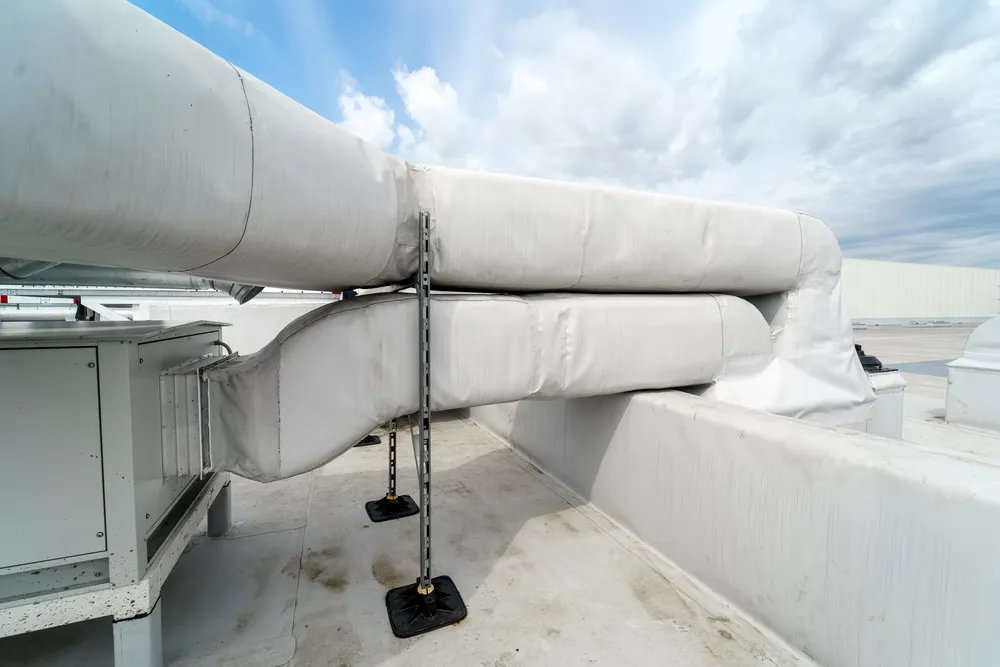
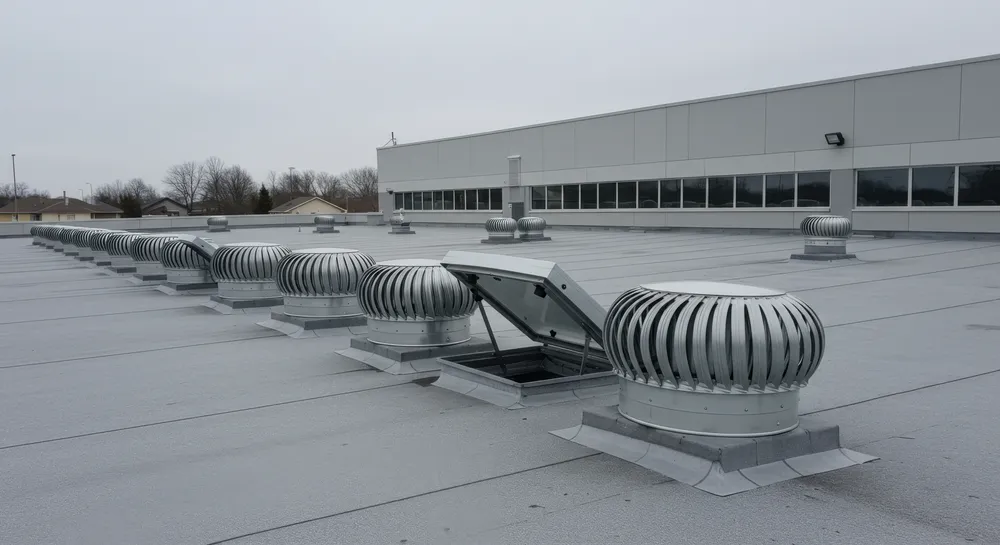
That makes proper installation around seams, drains, roof edges, HVAC equipment, vents, curbs, walls and penetrations especially important on flat and low-slope roofs.
The membrane matters.
But so does everything around it.
SEAMS | DRAINS | FLASHING | PENETRATIONS | EDGES | SLOPE
Flat Doesn’t Actually Mean Flat.
A properly designed low-slope roof needs a way to move water toward drains, gutters, scuppers or other drainage points.
Unlike steep-slope roofs, which rely heavily on gravity to quickly shed water, low-slope roofs require roofing systems designed to resist water intrusion at very shallow slopes.
That’s why traditional asphalt shingles aren’t appropriate for many low-slope applications.
THE GOAL ISN’T JUST WATERPROOFING.
IT’S WATER MANAGEMENT.
Roof slope, drainage, membrane selection, seams, flashing and penetrations must work together as a complete system.
Understanding Flat Roofing Systems
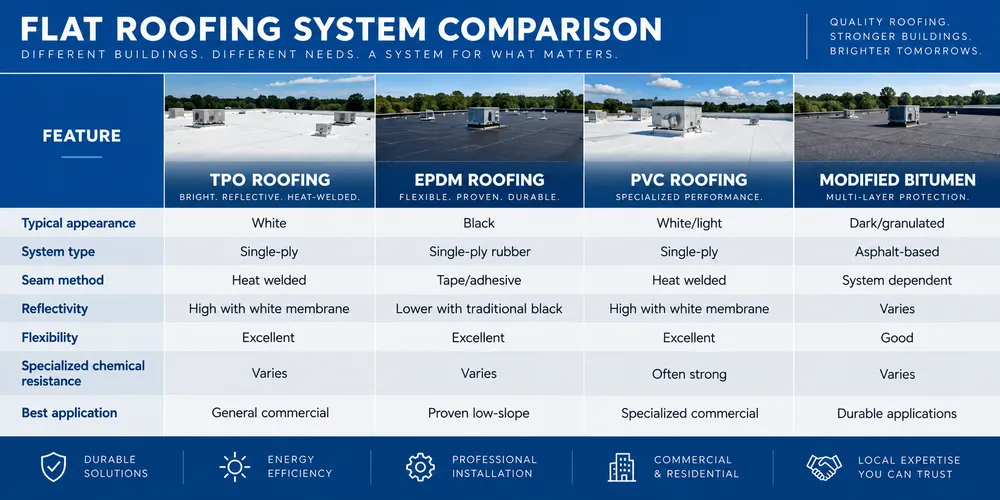
TPO Roofing
Bright. Reflective. Heat-Welded.
TPO—thermoplastic polyolefin—is a single-ply roofing membrane widely used on commercial and low-slope roofs.
One of its defining features is its heat-welded seams, which join membrane sheets together to create a continuous roofing surface.
White TPO is also highly reflective, which can help reduce solar heat absorption compared with darker roofing surfaces.
BEST SUITED FOR:
Commercial buildings • Retail • Offices • Warehouses • Low-slope applications
EPDM Roofing
Flexible. Proven. Durable.
EPDM is a synthetic rubber roofing membrane with a long history of use on flat and low-slope roofs.
It is commonly black and is known for flexibility and weather resistance. Unlike TPO’s heat-welded seams, EPDM systems typically use tapes or adhesives at seams and details.
BEST SUITED FOR:
Commercial properties • Additions • Low-slope roofs • Certain residential applications
PVC Roofing
Specialized Performance.
PVC is another thermoplastic single-ply membrane with heat-welded seams.
Certain PVC roofing systems can be particularly useful for buildings where the roof may encounter grease, oils or particular chemicals, making system selection important for restaurants and some industrial applications.
Several Central Kentucky commercial contractors offer PVC alongside TPO and EPDM for exactly these types of specialized applications.
Modified Bitumen
Multi-Layer Protection.
Modified bitumen roofing is an asphalt-based low-slope roofing system designed to provide durable waterproofing through membrane layers.
It can be useful in applications where durability and rooftop traffic are important considerations.
Lexington-area commercial roofers currently offer modified bitumen alongside single-ply systems for low-slope commercial applications.
Which Flat Roofing System Is Right for Your Building?
There’s no single “best” flat roof.
The right roofing system depends on your building, roof design, drainage, existing roof, rooftop equipment, budget and performance requirements.
That’s why Harrison’s starts with the roof—not the product.
A Flat Roof Is a System—Not Just a White Sheet.
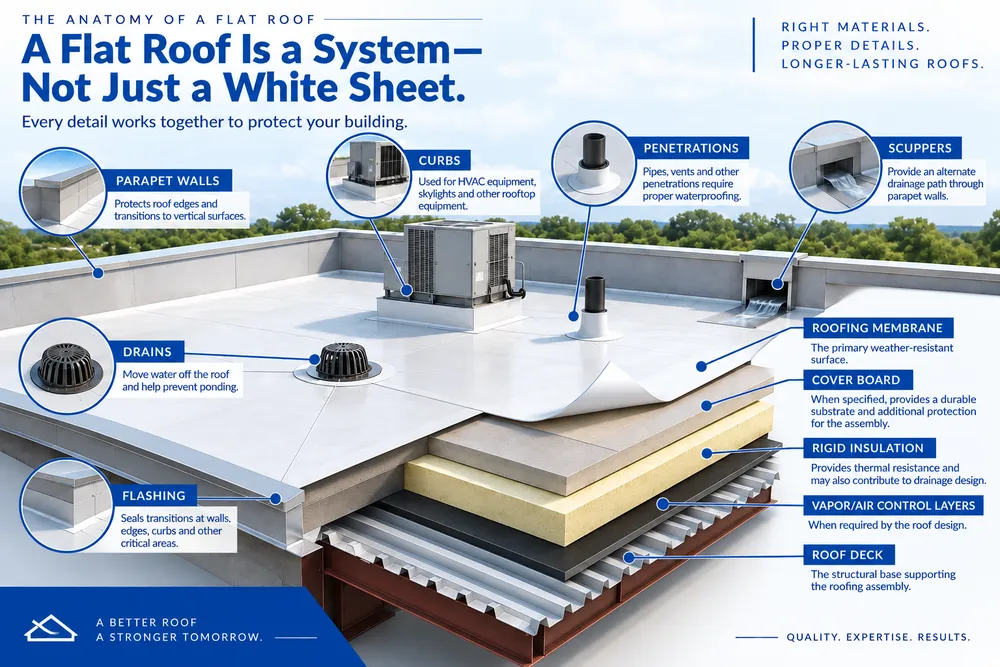
Water Is Supposed to Leave Your Roof.
PONDING WATER IS A WARNING SIGN.
After rainfall, some temporary surface water can occur while a roof drains. But water that repeatedly remains in areas of a flat roof can point to drainage, slope or structural concerns that deserve evaluation.
Persistent ponding can place unnecessary stress on a roofing system and may accelerate deterioration of some roof components.
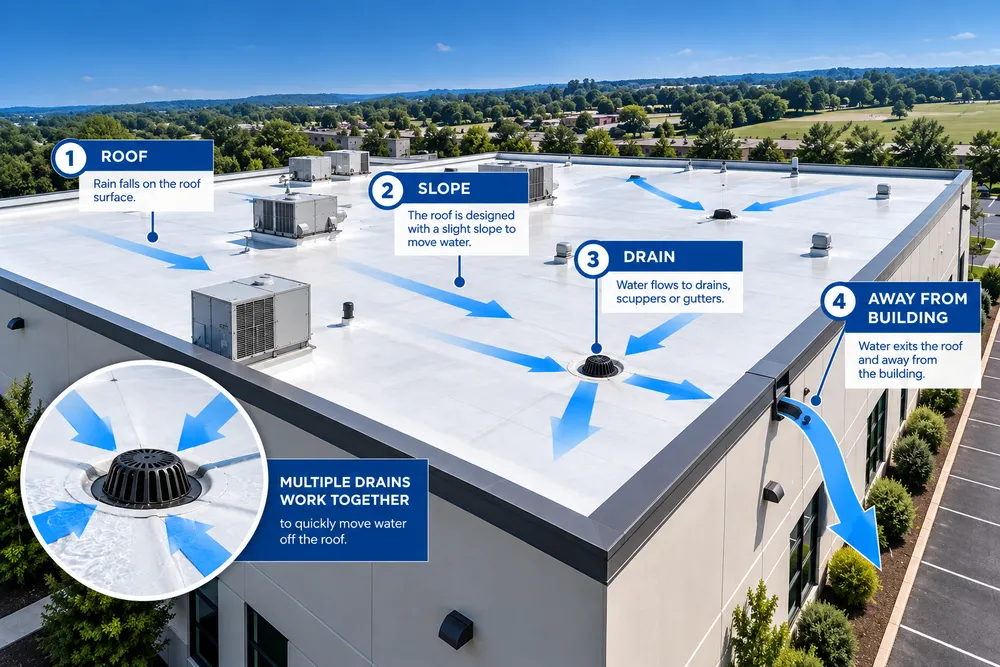
At Harrison’s, drainage is part of the conversation.
When evaluating a flat or low-slope roof, we look at more than the membrane. Existing drainage patterns, penetrations, flashing and visible areas of concern help us understand why a roofing problem is happening—not just where the water appeared inside.
Where Flat Roof Problems Often Begin
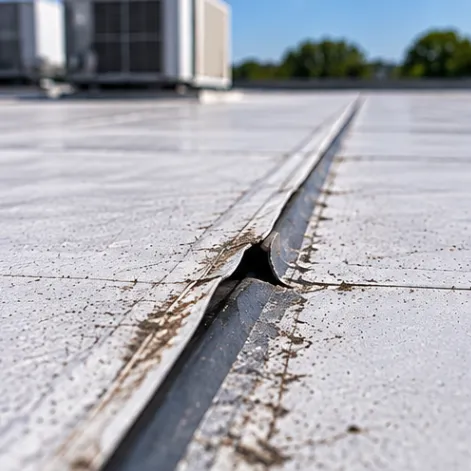
SEAMS
Failed or compromised seams can create a path for moisture.
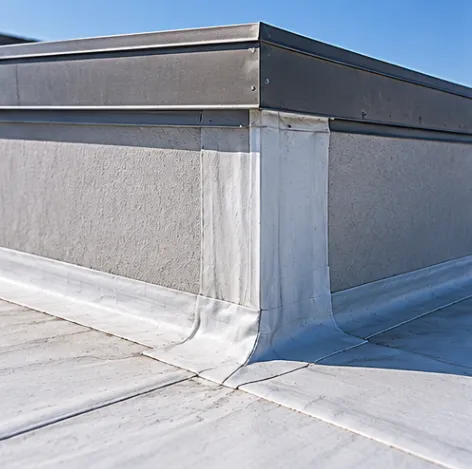
FLASHING
Transitions between roofing surfaces, walls and roof edges require careful detailing.
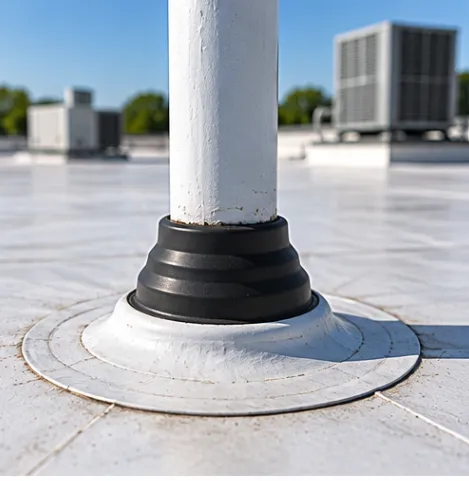
PENETRATIONS
Pipes, vents, HVAC equipment and other penetrations create complex waterproofing areas.
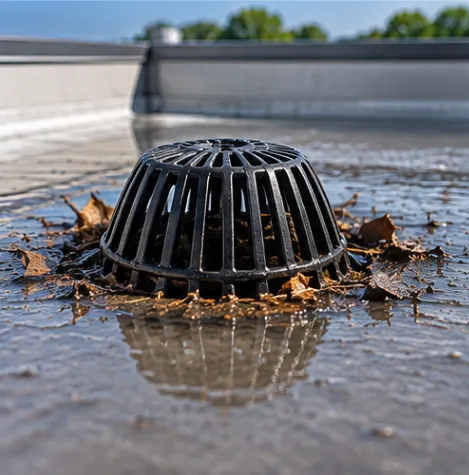
DRAINS
Clogged or poorly performing drainage can allow water to remain on the roof.
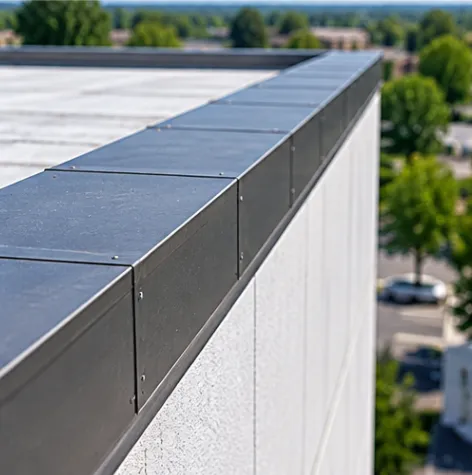
ROOF EDGES
Perimeter details are particularly important because they’re exposed to wind and weather.
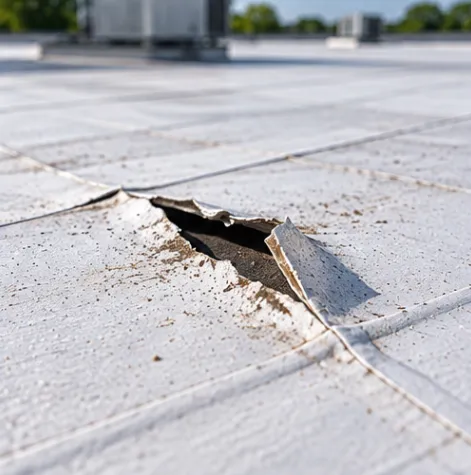
MEMBRANE DAMAGE
Punctures, deterioration, storm damage or rooftop activity can compromise the roofing surface.
A leak inside doesn’t always tell you where the roof is leaking.
Water can travel through a roofing assembly before it becomes visible inside the building.
Does Your Flat Roof Need Repair—or Replacement?
REPAIR MAY MAKE SENSE WHEN:
✓ Damage is localized
✓ The membrane is otherwise performing well
✓ A specific flashing or penetration is causing trouble
✓ The roof still has meaningful service life
✓ Moisture hasn’t extensively affected the assembly
REPLACEMENT MAY BE APPROPRIATE WHEN:
✓ Problems are widespread
✓ Leaks repeatedly return
✓ The membrane is significantly deteriorated
✓ Moisture is widespread within the roof assembly
✓ Repair costs are becoming repetitive
✓ The roofing system has reached the end of its useful service life
We won’t know from the parking lot. The roof needs to be evaluated.
Your Roof Protects More Than the Building.
It protects:
Employees
Customers
Inventory
Equipment
Operations
Revenue
A commercial roofing project needs to account for more than installation. Access, safety, rooftop equipment, tenant activity and daily business operations all matter.
Harrison’s works to minimize disruption while protecting the property below.
Flat Roofing Isn’t Just for Commercial Buildings.
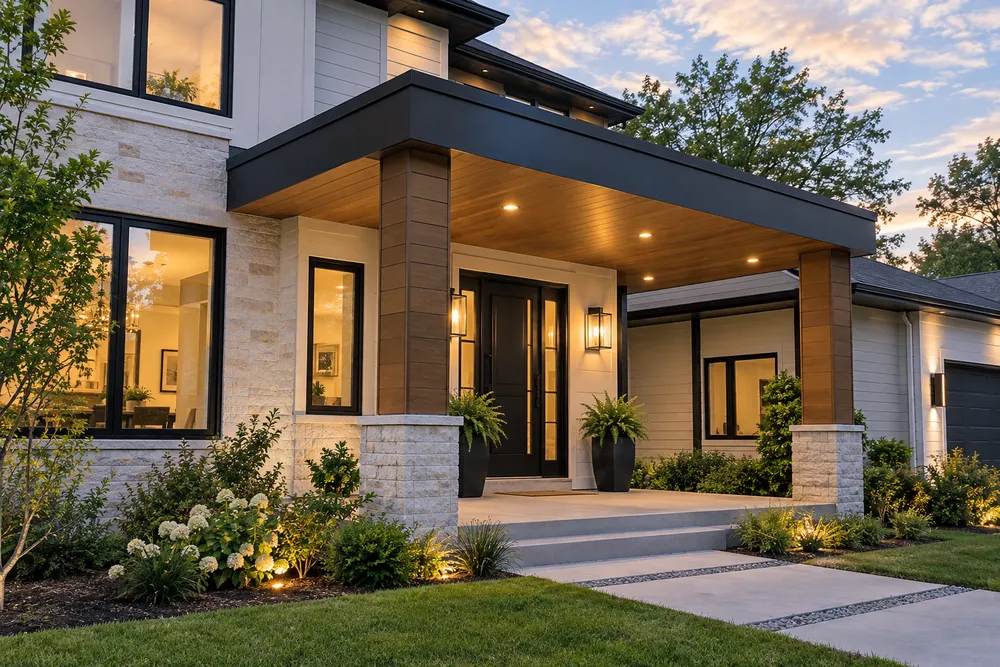
PORCHES
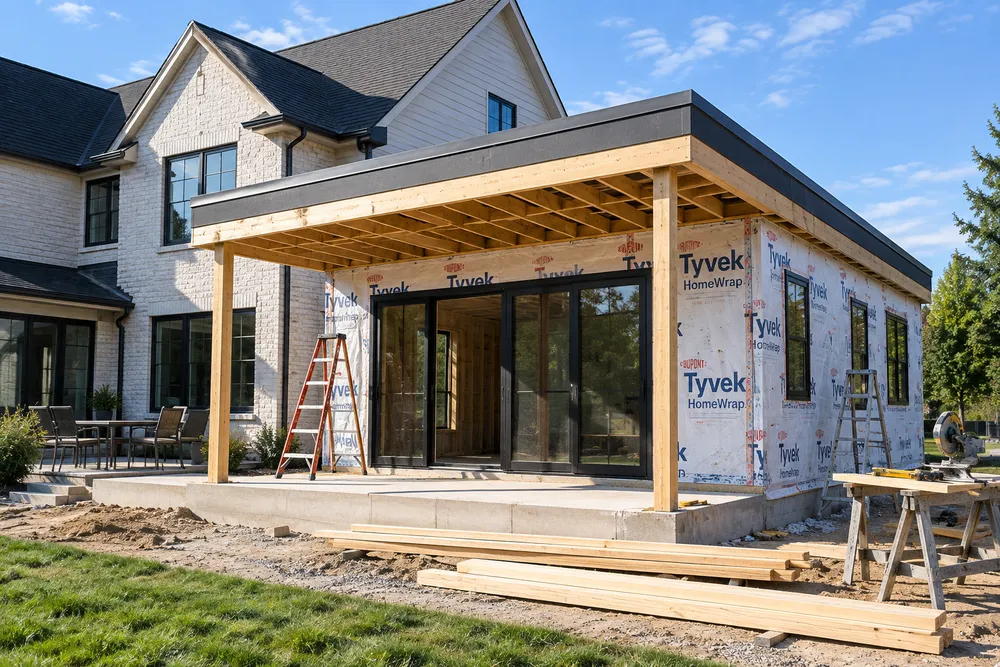
HOME ADDITIONS
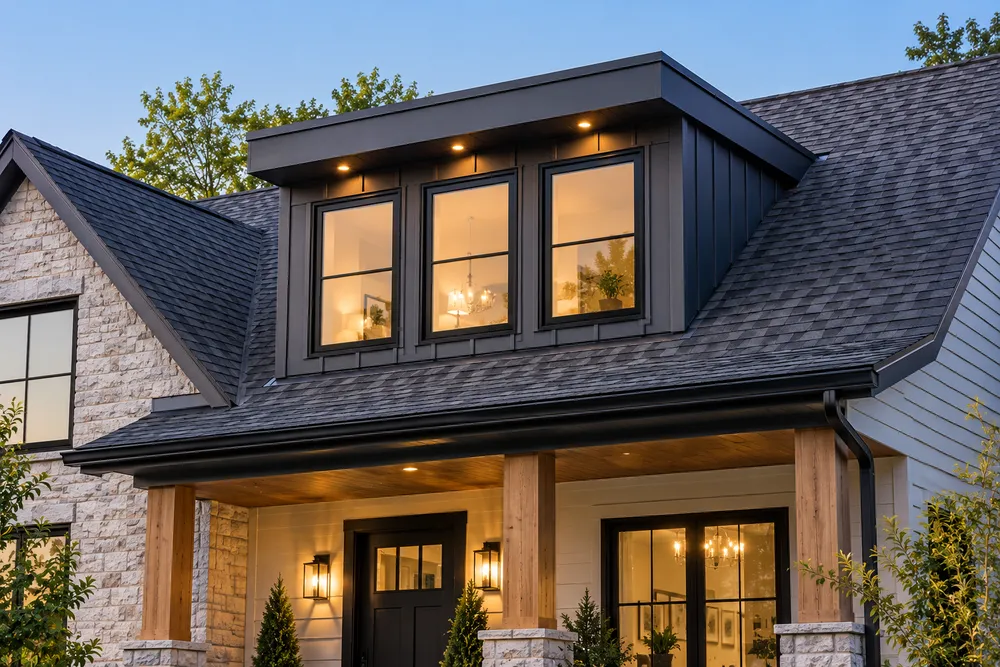
DORMERS
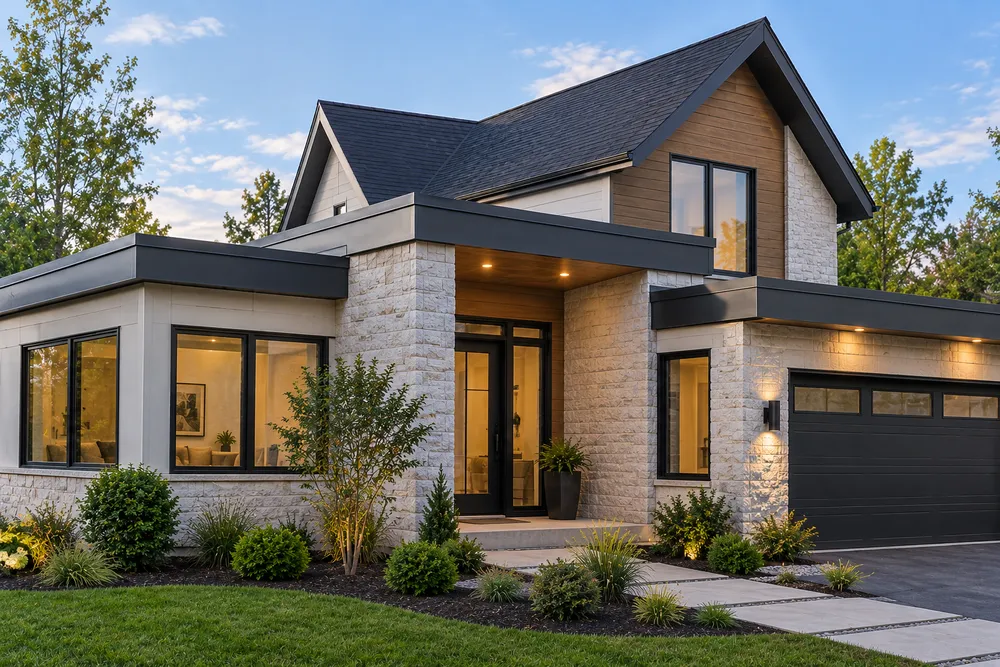
LOW-SLOPE SECTIONS
Some homes combine traditional steep-slope roofing with sections that require a completely different roofing system.
A porch, addition or architectural transition may have too little slope for conventional shingles.
Using the right roofing material for the roof slope matters.
We Look Beyond the Leak.
01
ROOF SURFACE
Evaluate visible membrane condition and damage.
02
SEAMS & FLASHING
Inspect critical transitions and roofing details.
03
PENETRATIONS
Evaluate visible conditions around HVAC curbs, pipes, vents and other penetrations.
04
DRAINAGE
Look for drainage concerns and evidence of recurring ponding.
05
ROOF EDGES
Evaluate perimeter conditions and transitions.
06
RECOMMENDATION
Discuss whether repair, restoration or replacement appears appropriate.
Your Flat Roof Shouldn’t Be Forgotten Until It Leaks.
Periodic roof evaluations can help identify developing issues such as:
✓ Damaged membrane
✓ Deteriorating seams or flashing
✓ Drainage obstructions
✓ Damage around rooftop equipment
✓ Punctures or surface damage
✓ Debris accumulation
✓ Storm-related damage
Especially after severe weather.
If a significant storm has moved through Central Kentucky, an evaluation can identify visible roofing damage before a small issue becomes a much larger one.
Flat Roofing FAQs: TPO, EPDM, Repairs & Replacement
What is the best roofing material for a flat roof?
There isn’t one roofing material that’s best for every flat or low-slope roof. TPO, EPDM, PVC and modified bitumen are among the systems commonly used, and each has advantages for different applications.
The right choice depends on factors such as the building’s roof design, slope and drainage, existing roofing system, insulation requirements, rooftop equipment, expected foot traffic, budget and long-term goals.
At Harrison’s Roofing, we believe the right roofing system starts with evaluating the roof—not simply choosing a product.
What's the difference between TPO and EPDM?
TPO and EPDM are both single-ply roofing membranes, but they’re made from different materials and installed differently.
TPO is a thermoplastic membrane commonly available in white and other reflective colors. Its seams are typically joined using hot-air welding.
EPDM is a synthetic rubber membrane traditionally available in black, although other options exist. Its seams and details are generally joined using manufacturer-approved tapes, adhesives and accessories.
Which system is appropriate depends on the particular roof and application.
How long does a flat roof last?
A properly designed, installed and maintained flat roofing system can provide many years—and often decades—of service. However, there isn’t one lifespan that applies to every flat roof.
Service life depends on the roofing material, installation quality, drainage, climate, UV exposure, maintenance, rooftop traffic and how quickly damage is addressed.
Manufacturer warranty periods also shouldn’t automatically be treated as the exact expected lifespan of a roof.
Can you repair a flat roof instead of replacing it?
Often, yes.
If damage is localized and the overall roofing system remains in serviceable condition, a repair may be appropriate. Problems involving flashing, seams, punctures or individual penetrations can sometimes be addressed without replacing the entire roof.
Replacement may make more sense when deterioration is widespread, moisture has affected large areas of the assembly, leaks repeatedly return or the roofing system has reached the end of its useful service life.
A roof evaluation is the best way to determine which approach makes sense.
Why does my flat roof keep leaking?
Recurring flat-roof leaks can have several causes, including:
- Damaged or deteriorated membrane
- Failed seams
- Flashing problems
- Damage around pipes or HVAC equipment
- Clogged or inadequate drainage
- Ponding water
- Roof-edge problems
- Punctures from rooftop activity
- Previous repairs that haven’t addressed the actual source
The place where water appears inside the building isn’t necessarily where it’s entering through the roof.
Water can travel within a roofing assembly before becoming visible indoors.
Is ponding water normal on a flat roof?
Some water may remain temporarily while a low-slope roof drains after rainfall. However, persistent or recurring ponding water deserves attention.
It may indicate problems involving roof slope, drainage, clogged drains, insulation or other parts of the roof assembly. Standing water can also place additional stress on roofing materials and contribute to deterioration.
A flat roof shouldn’t simply be thought of as a surface that holds water. Proper drainage is an important part of the roofing system.
Can you install shingles on a low-slope roof?
Not on every low-slope roof.
Asphalt shingles rely on roof slope to shed water and have minimum slope requirements. When a roof is too shallow for shingles, a roofing system specifically designed for low-slope applications may be required.
That’s why porches, additions, dormers and other low-slope sections of a residential home sometimes need a different roofing material than the main roof.
What causes bubbles or blisters in a flat roof?
Bubbles, blisters or raised areas can develop for different reasons depending on the roofing system. Possible causes include trapped moisture or air, adhesion problems, installation conditions, deterioration or movement within the roofing assembly.
A blister shouldn’t automatically be cut open or repaired without first determining what’s causing it.
Have the area evaluated so the appropriate repair—if one is needed—can be determined.
How do I know whether I have TPO, EPDM or another roof system?
Sometimes color and appearance provide clues, but they aren’t enough to reliably identify every roofing system.
For example, traditional EPDM is commonly black, while TPO and PVC are frequently white. Modified bitumen may have a granulated or asphalt-like appearance.
However, color alone doesn’t identify a roofing material. Existing coatings, repairs, multiple roofing layers and similar-looking membranes can make identification more difficult.
A roofing professional can examine the membrane, seams, flashing and other characteristics to help determine what type of roofing system is present.
Can TPO roofing be repaired?
Yes. TPO roofing can often be repaired when damage is localized and the existing membrane remains suitable for repair.
Depending on the condition, repairs may address punctures, tears, seams, flashing or areas around penetrations. Because TPO is a thermoplastic material, compatible TPO repair material can often be heat-welded to properly prepared existing membrane.
The condition and age of the existing membrane can affect repairability.
How are TPO seams joined?
TPO membrane seams are generally joined using specialized hot-air welding equipment.
The process heats overlapping membrane surfaces so they can be welded together. When properly performed according to the roofing-system manufacturer’s requirements, this creates a strong, watertight seam.
This is one reason installation workmanship is so important with TPO roofing.
Can flat roofing be installed in cold weather?
Yes, certain flat roofing work can be performed during colder weather, but temperature and weather conditions can affect installation.
Different membranes, adhesives, primers and other roofing products have specific temperature and application requirements. Moisture, snow, ice and surface conditions must also be considered.
Manufacturer installation requirements and weather conditions ultimately determine whether work should proceed.
How long does flat roof replacement take?
It depends on the roof.
The size of the building, roofing system, amount of tear-off required, roof-deck condition, insulation, drainage work, number of penetrations, HVAC equipment and weather can all affect the schedule.
A smaller, straightforward low-slope roof may move relatively quickly, while a large commercial roof with extensive equipment and complicated details can take considerably longer.
After evaluating the property, Harrison’s Roofing can provide a project-specific timeline.
What happens to HVAC equipment during roof replacement?
Rooftop HVAC equipment requires careful coordination during a roofing project.
The roofing system has to be properly detailed around equipment curbs, supports, pipes, electrical penetrations and other components. Depending on the project, HVAC or other qualified trades may need to be involved if equipment must be temporarily disconnected, raised or moved.
Roofers should never casually move or alter mechanical equipment outside their scope.
Can you replace a flat roof while my business remains open?
In many cases, commercial roofing work can be planned while a business continues operating.
However, every property is different. Access, noise, odors, equipment, parking, entrances, customer traffic, employee safety and the type of roofing system being installed all need to be considered.
We’ll discuss the project schedule and property access with you before work begins so you understand how roofing operations may affect your business.
How often should a commercial flat roof be inspected?
A good general practice is to have a commercial roof professionally evaluated at least once or twice a year and after significant storms or unusual events, although the appropriate schedule can depend on the roofing system, manufacturer requirements, warranty and building conditions.
Property owners should also pay attention to clogged drains, debris, visible damage and changes following work by HVAC technicians or other contractors who have accessed the roof.
Don’t wait until you see water inside the building to start paying attention to the roof.
Do residential homes ever need flat roofing?
Absolutely.
Flat and low-slope roofing isn’t limited to warehouses and commercial buildings.
Residential applications commonly include:
Porches • Home additions • Dormers • Entry roofs • Garages • Modern architectural sections • Other low-slope areas
A house can therefore have asphalt shingles on the main steep-slope roof and a completely different roofing system on its low-slope sections.
What does a flat roof replacement cost?
Flat roof replacement costs vary significantly because square footage is only one part of the price.
Important factors include:
Roof size • Existing roofing system • Tear-off requirements • Membrane type • Insulation • Cover board • Roof-deck repairs • Drainage • Roof access • HVAC equipment • Penetrations • Flashing • Parapet walls • Roof complexity
That’s why giving a meaningful flat-roof replacement price without evaluating the property can be misleading.
The best way to determine the cost of your flat roof is to evaluate the roof itself.
Harrison’s Roofing can inspect the existing roofing system, identify visible concerns, discuss appropriate roofing options and provide an estimate based on your particular property.
A New Roof Is an Investment in Your Property.
If your roofing project qualifies, financing options may make it easier to move forward with necessary roof work without delaying protection your property needs.
DON’T WAIT FOR THE NEXT LEAK.
Let’s Find Out What’s Happening on Your Roof.
Whether you’re dealing with an active leak, recurring roof problems or planning for a future replacement, Harrison’s Roofing can evaluate your flat or low-slope roof and help you understand your options.