ACTIVE LEAK • STORM DAMAGE • OPEN ROOF • FALLEN DEBRIS
When Your Roof Can’t Wait.
A sudden roof leak, missing roofing material or storm-created opening can expose your home or business to additional water damage.
Harrison’s Roofing provides emergency roofing assistance to help identify the problem, protect the property when conditions allow and determine the next step toward a permanent repair.
Residential • Commercial • Storm Damage • Temporary Protection • Roof Leaks
Roof Leaking Right Now? Start Here.
01
PROTECT PEOPLE FIRST
Stay away from areas where ceilings are sagging, water is near electrical fixtures or structural damage may be present.
If the building feels unsafe, leave the affected area and contact the appropriate emergency services.
02
CONTROL WATER INSIDE
If it can be done safely:
- Move furniture and belongings
- Place containers beneath active drips
- Protect flooring
- Photograph visible damage
- Keep people away from wet electrical areas
03
DO NOT CLIMB ON THE ROOF
Wet, storm-damaged or partially failed roofing can be extremely dangerous.
Do not attempt rooftop tarping or repairs yourself.
04
CALL FOR ROOFING HELP
Describe what is happening:
Active leak? Missing shingles? Tree damage? Open roof? Interior water?
That helps determine the urgency and what equipment may be needed.
What counts as a roofing emergency?
What Is Considered a Roofing Emergency?

ACTIVE WATER INTRUSION
Water is currently entering the home or building.
MISSING ROOFING MATERIAL
Wind has removed shingles, panels or other roofing components.
FALLEN TREE OR LIMB
Impact has damaged or punctured the roofing system.
LARGE OPENING
A section of roofing or decking is exposed to weather.
SEVERE STORM DAMAGE
Wind, hail or debris has created immediate concerns.
COMMERCIAL ROOF FAILURE
A leak or damaged low-slope roof threatens inventory, equipment or operations.
If the roof is allowing water in or leaving the structure exposed, it deserves prompt attention.
A Leak Is a Symptom. The Source May Be Somewhere Else.
Stop the Exposure First. Diagnose the Permanent Repair Next.
Emergency roofing work often has two stages.
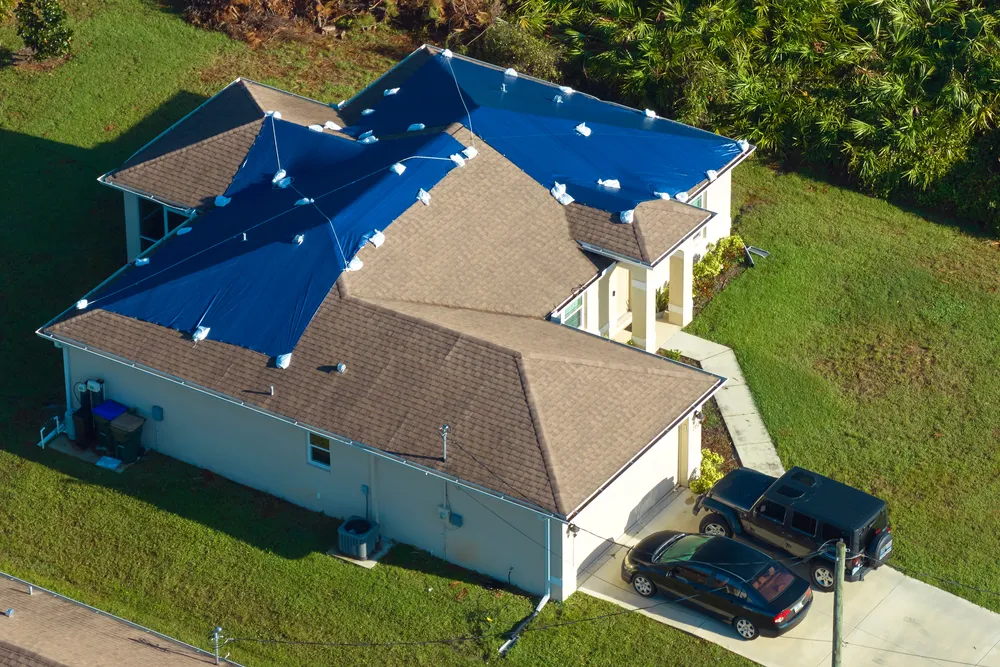
STAGE 1 — STABILIZE
The immediate goal is to help prevent additional water intrusion or exposure.
Depending on the damage and safety conditions, this may involve:
Temporary tarping
Temporary weatherproofing
Covering an opening
Securing loose materials
Emergency patching
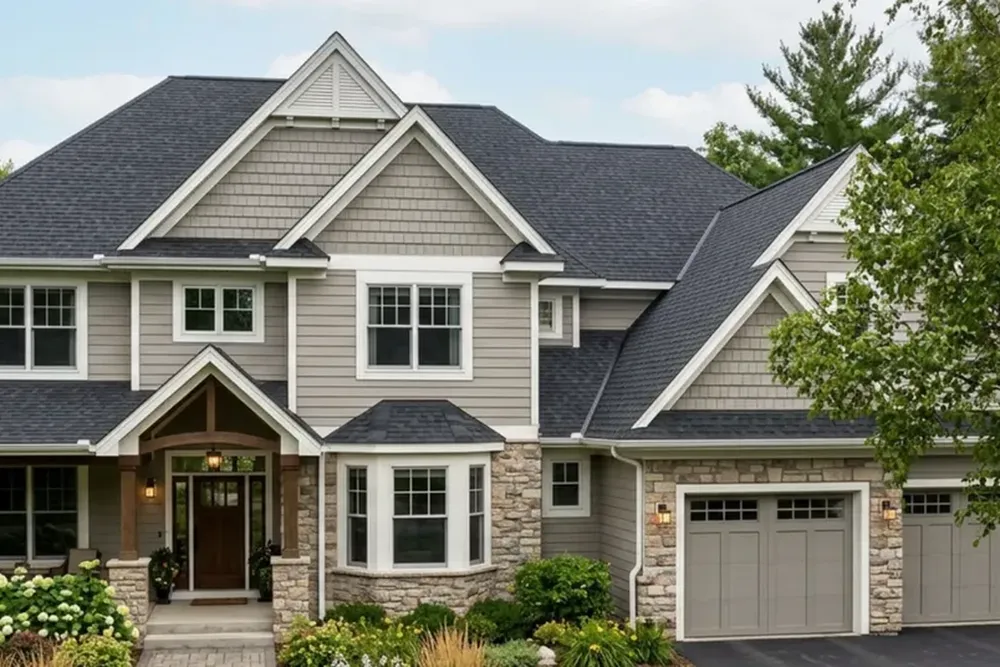
STAGE 2 — PERMANENT REPAIR
Once conditions are safe and the roof can be properly evaluated, Harrison’s can determine what permanent work is appropriate.
Large callout:
A tarp is protection—not the finished roof repair.
What Does Emergency Roof Tarping Do?
Temporary tarping can help protect an exposed roof until permanent repairs are possible.
A properly installed tarp generally needs to:
Extend beyond the damaged area
Be securely anchored
Resist wind
Direct water away from the opening
Avoid trapping water in a way that creates another problem
3D Roofs specifically emphasizes that emergency tarp placement must cover beyond the opening, stay anchored and preserve drainage.
Tarping should only be performed when roof access and weather conditions allow it to be done safely.
Tree or Limb on the Roof?
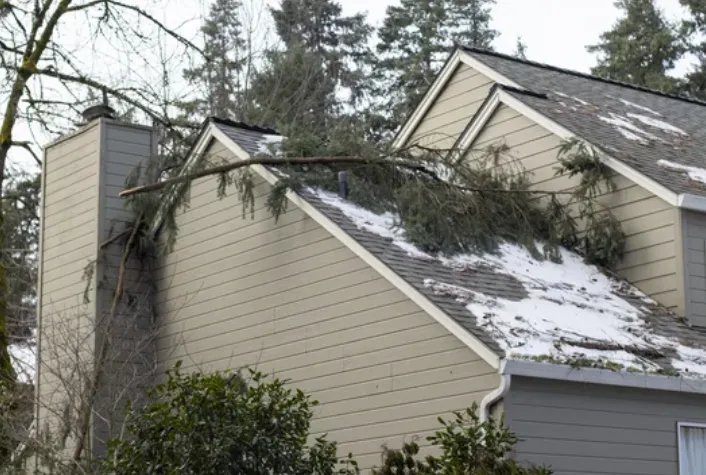
Do not attempt to remove a large limb or tree from the roof yourself.
The impact may have damaged:
- Shingles
- Roof decking
- Rafters or trusses
- Gutters
- Fascia
- Chimneys
- Skylights
Structural damage may not be visible from outside.
If a large tree or limb has significantly impacted the building, contact the appropriate emergency or tree-removal professionals before anyone accesses the roof.
Roofing work should begin only when the structure can be approached safely.
Severe Weather Can Turn a Small Weakness Into an Immediate Problem.
WIND
HAIL
FALLING DEBRIS
HEAVY RAIN
A roof may have been performing adequately before a storm, but wind, hail or debris can damage roofing materials or expose vulnerabilities around flashing, penetrations and roof edges.
We Look for More Than the Wet Spot.
Potential evaluation points:
Roof surface
Flashing
Valleys
Pipe boots
Roof penetrations
Chimneys
Gutters and drainage
Attic conditions
Roof decking
Ventilation
The goal is to identify the likely source—not simply cover the stain inside.
Emergency Roofing for Your Home
A roofing emergency can threaten more than shingles.
Water intrusion may affect:
Ceilings
Walls
Insulation
Flooring
Furniture
Electrical systems
Personal belongings
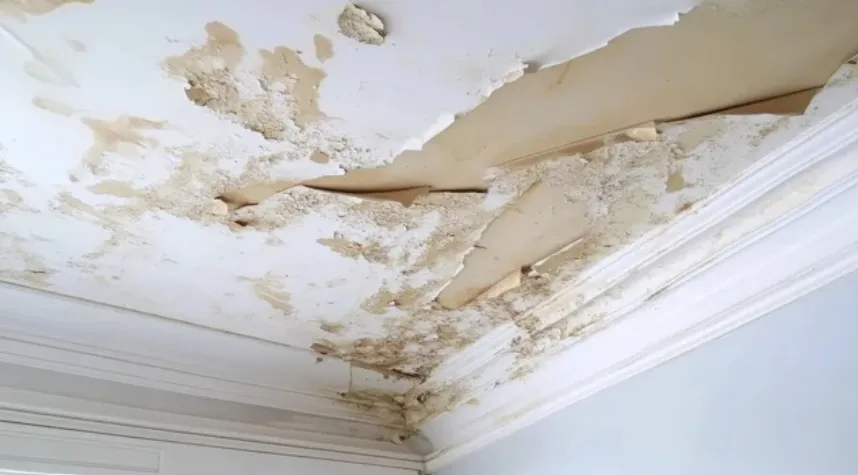
Prompt stabilization can help limit additional exposure while the permanent roofing solution is being determined.
When a Commercial Roof Leaks, the Business Below Is at Risk.
A commercial roof leak may threaten:
Inventory
Equipment
Employees
Customers
Tenant spaces
Daily operations
Harrison’s can evaluate accessible commercial roofing conditions and help determine an appropriate temporary and permanent response.
Does an Emergency Leak Mean I Need a New Roof?
Not necessarily.
TEMPORARY PROTECTION
When conditions prevent an immediate permanent repair.
ROOF REPAIR
When damage is localized and the rest of the roof remains serviceable.
ROOF REPLACEMENT
When damage or deterioration is widespread or the roofing system can no longer be effectively repaired.
Emergency does not automatically mean replacement.
It means the problem needs to be evaluated promptly.
If the Emergency Was Caused by a Storm
If wind, hail or falling debris caused the damage, insurance may become part of the process.
Harrison’s can help with the roofing side by:
Evaluating visible damage
Photographing roofing conditions when practical
Providing a roofing estimate
Discussing the necessary repair scope
Your insurance carrier determines coverage. Harrison’s Roofing determines what roofing work is needed.
What Happens When You Call Harrison’s?
01
TELL US WHAT HAPPENED
Active leak, storm damage, tree impact or another roofing problem.
02
DETERMINE URGENCY
We assess what information is available and what may be needed to safely evaluate the situation.
03
EVALUATE THE DAMAGE
Accessible roofing and interior conditions are examined.
04
STABILIZE WHEN APPROPRIATE
Temporary protection may be installed if conditions allow.
05
DOCUMENT THE CONDITION
Visible damage and affected roofing components can be documented.
06
PLAN THE PERMANENT REPAIR
Repair or replacement recommendations are based on the actual condition of the roofing system.
During a Roofing Emergency—Avoid These Mistakes.

FAQ
What qualifies as a roofing emergency?
A roofing problem becomes an emergency when it creates an immediate risk of water intrusion, additional property damage, or unsafe conditions.
Examples may include an active roof leak, a large section of missing roofing material, storm-created openings, fallen trees or limbs, damaged flashing, exposed roof decking, or significant damage to a commercial roofing system.
If your roof is actively allowing water into the building or leaving the structure exposed to weather, it should be addressed promptly.
What should I do if my roof is leaking right now?
First, protect the people and property inside your home. If it can be done safely, move furniture and valuables away from the affected area and place containers beneath dripping water.
Stay away from sagging ceilings and water near electrical fixtures. Do not climb onto a wet or damaged roof to look for the source.
Then contact a roofing professional so the roof can be evaluated and, when appropriate, temporarily protected until a permanent repair can be completed.
If the building appears structurally unsafe or there is an electrical or other immediate life-safety hazard, leave the affected area and contact the appropriate emergency service.
Do you offer 24-hour emergency roof repair?
Yes. Harrison’s Roofing offers 24-hour emergency roofing assistance for urgent situations such as active leaks and severe storm damage. Contact us as soon as possible and tell us what is happening so we can determine the appropriate response.
Can you tarp my roof during a storm?
Temporary tarping may be possible, but safety and weather conditions come first.
Roofing crews should not access a roof during lightning, dangerous winds, severe weather or other conditions that make rooftop work unsafe.
Once conditions allow safe access, temporary protection may be installed to help limit additional water intrusion until permanent repairs can be made.
Never attempt to tarp a wet or storm-damaged roof yourself.
How long can a roof tarp stay on?
A roof tarp should be considered a temporary protective measure—not a permanent roofing solution.
How long it can safely remain depends on the tarp, installation method, weather exposure, roof conditions and extent of the damage.
Wind, rain and sunlight can deteriorate temporary coverings over time, so permanent repairs should be scheduled as soon as reasonably practical.
A tarp buys time. It doesn’t replace the roof repair.
Can you repair my roof the same day?
Sometimes a permanent repair may be possible during the initial visit, but not every roofing emergency can—or should—be permanently repaired immediately.
The answer depends on the type and extent of damage, roofing material, weather, safe roof access, material availability and whether hidden damage needs further evaluation.
In some situations, the appropriate first step is temporary stabilization followed by a properly planned permanent repair.
What if a tree falls on my roof?
Keep everyone away from the affected area and do not attempt to remove a large tree or limb yourself.
A tree impact can damage more than the visible roofing material. It may affect the roof decking, rafters or trusses, gutters, fascia, chimney or other structural components.
If there is significant structural damage, electrical involvement or an immediate safety concern, leave the affected area and contact the appropriate emergency professionals.
Once the property can be safely approached, the roofing system can be evaluated and temporary protection installed when appropriate.
Should I call a roofer or insurance first?
It depends on the circumstances.
If you’re unsure what caused the problem or how extensive the roofing damage is, a roofing evaluation can help identify visible conditions and determine what roofing work may be necessary.
If you have obvious significant storm damage or believe you have a covered loss, notify your insurance company promptly according to your policy requirements.
To put it simply –
Harrison’s evaluates the roof. Your insurance company evaluates coverage.
Will insurance cover emergency roof repairs?
It may, depending on what caused the damage and the terms of your insurance policy.
Damage resulting from certain storms or other covered events may qualify for coverage, while deterioration, maintenance issues or excluded causes may not.
Deductibles, exclusions, roof age and other policy provisions can also affect a claim.
Harrison’s can document visible roofing conditions and provide roofing information, but your insurance carrier determines whether the loss and emergency work are covered.
Does an emergency leak mean I need a new roof?
No.
An emergency describes the urgency of the situation—not necessarily the amount of roofing work required.
A localized leak may be repairable. Other situations may involve widespread damage or deterioration that makes replacement the more practical option.
Harrison’s can evaluate the roof and recommend the appropriate permanent solution based on its actual condition.
Emergency doesn’t automatically mean replacement.
Can you repair missing shingles after a storm?
Often, yes—if the damage is localized and an effective repair can be made.
Whether individual shingles can be repaired or replaced depends on factors such as how many shingles are affected, their location, the age and condition of the existing roof, surrounding damage and availability of compatible roofing materials.
If damage is widespread, additional options may need to be considered.
Can you repair a leaking metal roof?
Yes, many metal-roof leaks can be repaired depending on their cause and the condition of the overall system.
Potential problem areas include seams, flashing, fasteners, penetrations, sealants, transitions and damaged panels.
Standing-seam and exposed-fastener roofs are constructed differently, so identifying the roofing system and the actual source of the leak is important before determining the repair.
Can you perform emergency repairs on flat roofs?
Yes, flat and low-slope roofs can develop emergency leaks and require specialized evaluation.
Potential sources include membrane damage, failed seams, flashing, roof penetrations, HVAC curbs, drains, scuppers and other transitions.
Temporary measures may sometimes be used to limit additional water intrusion, followed by a permanent repair appropriate for the existing roofing system.
Do you provide emergency commercial roofing?
Yes. Harrison’s Roofing provides emergency roofing assistance for commercial properties and low-slope roofing systems.
A commercial roof leak can threaten inventory, equipment, tenant spaces and normal business operations. We evaluate the affected roofing system, identify visible areas of concern and determine whether temporary stabilization or immediate repair is appropriate.
Should I go into my attic during a leak?
Only if the attic is safely accessible and there are no electrical, structural or other hazards.
Attics can be difficult to navigate even under normal conditions. During a leak, wet insulation, slippery surfaces, limited walking areas and electrical components can create additional risks.
Never step between framing members onto drywall or ceiling material.
If you aren’t comfortable safely entering the attic, stay out and allow a professional to evaluate the situation.
Can water travel before appearing on my ceiling?
Yes—and this is one of the most important things to understand about roof leaks.
Water may enter through a damaged shingle, flashing, penetration or another roofing component and then travel along roof decking, rafters, trusses or other building materials before it finally appears on the ceiling.
That means:
The ceiling stain is not necessarily directly underneath the roof leak.
How do you find the source of an emergency roof leak?
Finding a roof leak often requires looking beyond the location of the interior water stain.
Depending on the roof and accessibility, Harrison’s may evaluate areas such as:
Roofing materials • Flashing • Valleys • Chimneys • Pipe boots • Vents • Roof penetrations • Transitions • Roof edges • Flat-roof seams and drainage
When appropriate and safely accessible, attic or interior conditions may provide additional clues.
The goal is to trace the evidence and identify the likely entry point rather than simply repairing the area directly above the ceiling stain.
What happens after temporary repairs are made?
Once the immediate exposure has been controlled, the next step is determining the permanent roofing solution.
That may involve:
1. Evaluating the full extent of the damage
2. Documenting affected roofing components
3. Determining whether repair or replacement is appropriate
4. Preparing the permanent scope of work
5. Coordinating insurance-related documentation when applicable
6. Completing the permanent roofing work
Temporary protection should continue to be monitored until the permanent work is completed.
STABILIZE → EVALUATE → PERMANENTLY REPAIR
Because emergency roofing can become a major unexpected expense:
Roofing Problems Don’t Always Wait for the Budget.
If permanent roofing work is needed, financing options may be available to help qualified customers manage the cost.
DON’T LET AN OPEN ROOF BECOME A BIGGER PROBLEM.
Need Roofing Help Now?
If your roof is leaking, damaged or exposed to the weather, Harrison’s Roofing can help you understand what needs to happen next.
24 Hour Emergency Assistance